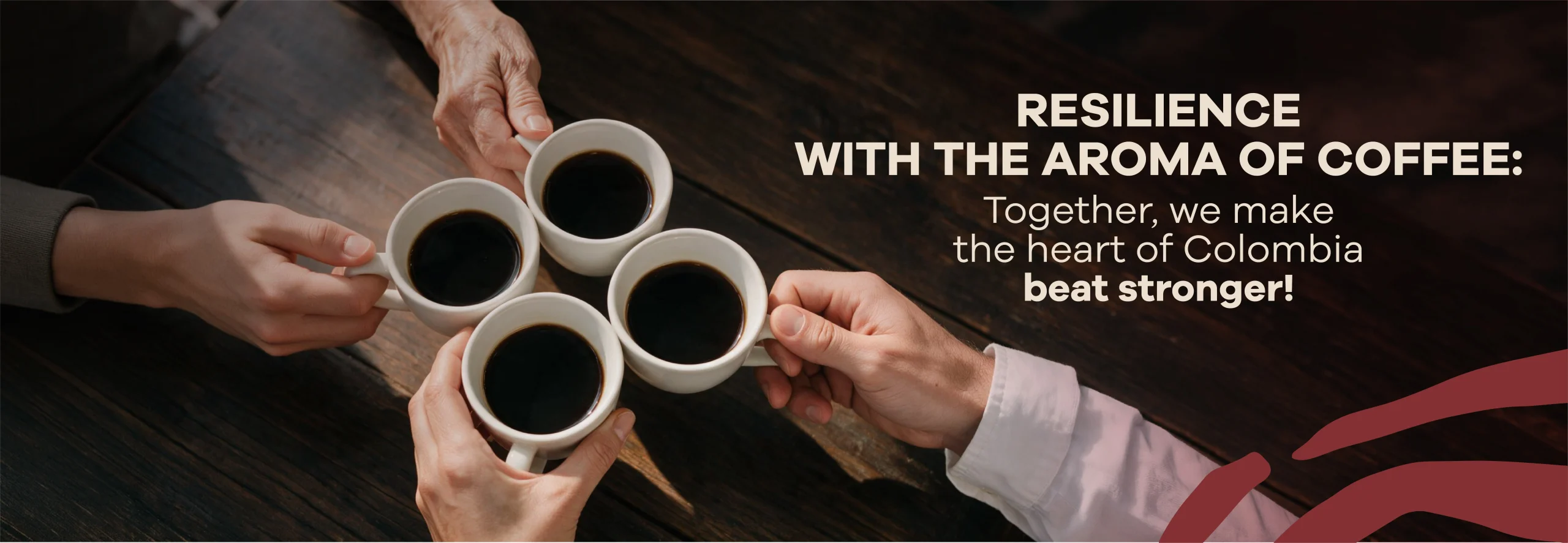
Resilience with the Aroma of Coffee
Following the earthquake in Colombia’s Coffee Region, Buencafé resumes 100% of operations and unites to support the reconstruction of local coffee growers.
Today, October 1st, we celebrate International Coffee Day, a special occasion to pay tribute to one of the world’s most beloved and shared beverages: coffee. That familiar cup that wakes us up, keeps us company during important moments, and most importantly, connects us with the people we care about the most.
We all have that coffee pending—with a friend we haven’t seen in a while, with mom who always has stories to tell, with a colleague, a boss, or someone special who’s still waiting for that long-promised chat.
Today is the perfect day to make that coffee happen. Because it’s not just about drinking coffee—it’s about everything that happens around the table: the smiles, the confidences, the memories, and the new plans that begin with every sip.
And what better way to share the moment than with a cup of 100% Colombian freeze-dried coffee—a symbol of quality, tradition, and pride. Coffee that represents us in more than 60 countries and carries, in every bean, the dedication of thousands of coffee growers.
So, on this special day, our invitation is simple: reach out to that person, share a moment, and enjoy a cup of Colombian coffee together. Because there’s no better excuse than coffee to reconnect—and no better reminder that the best moments in life always taste like coffee.
☕ Happy International Coffee Day!

Following the earthquake in Colombia’s Coffee Region, Buencafé resumes 100% of operations and unites to support the reconstruction of local coffee growers.
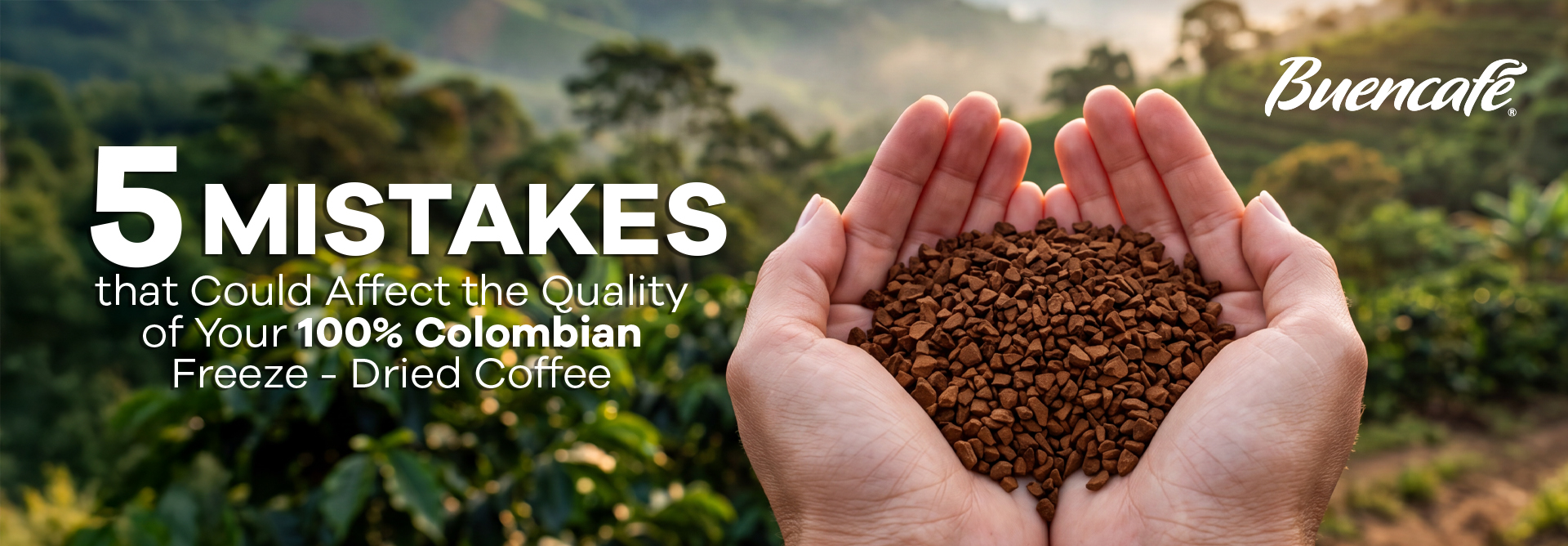
Although freeze-drying is known for preserving coffee’s aroma, flavor, and natural characteristics through its carefully controlled production process, its quality also depends on how it is stored and prepared. Here are five common mistakes that could affect your coffee—and the best ways to avoid them.
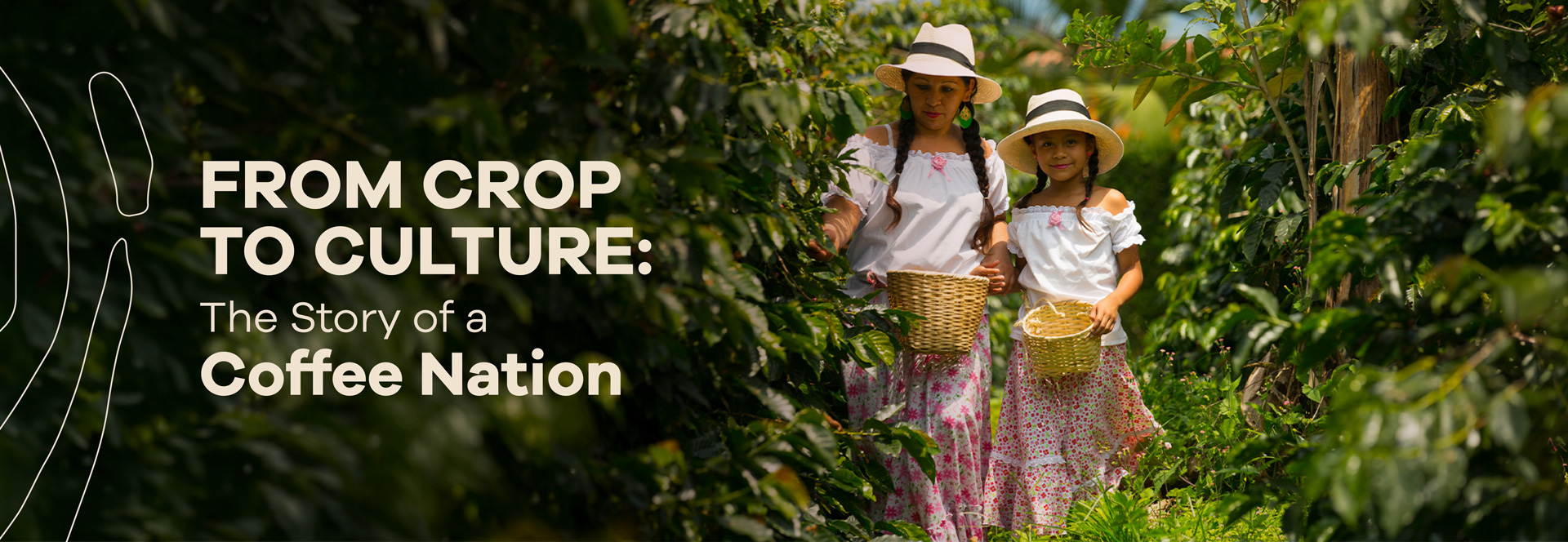
It is undeniable that, although Colombia is also a producer of cocoa, sugarcane, tobacco, cotton, bananas, and rice, nothing represents the country to the rest of the world quite like coffee. How did a bean that is not native to Colombia become one of the strongest symbols of its culture?