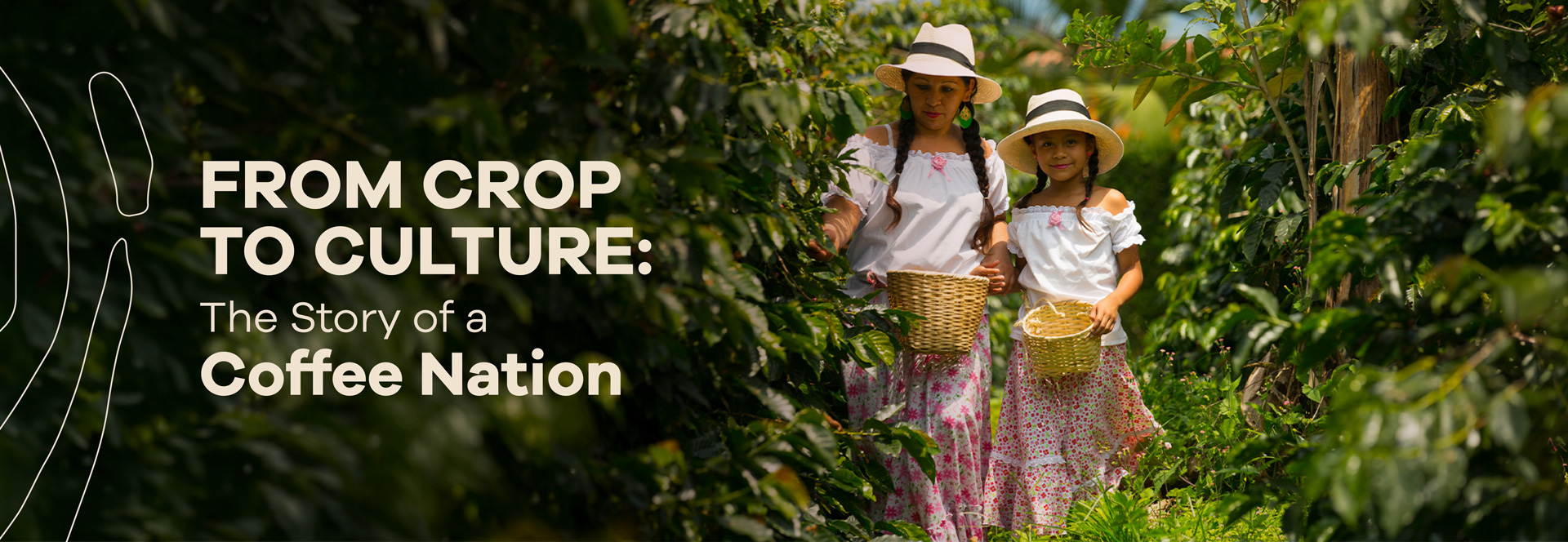
On the slopes of a mountain in El Páramo, Santander, or in a rural village in Montenegro, Quindío, Skilled and careful hands plant the seed in the fertile soil across Colombia.
With the patience that only the countryside can teach, Colombian coffee growers—owners of Buencafé—tend their crops under shifting sunlight and the mist that embraces the mountains. They combine inherited wisdom with acquired knowledge, creating a product that is recognized and appreciated in more than 60 countries around the world.
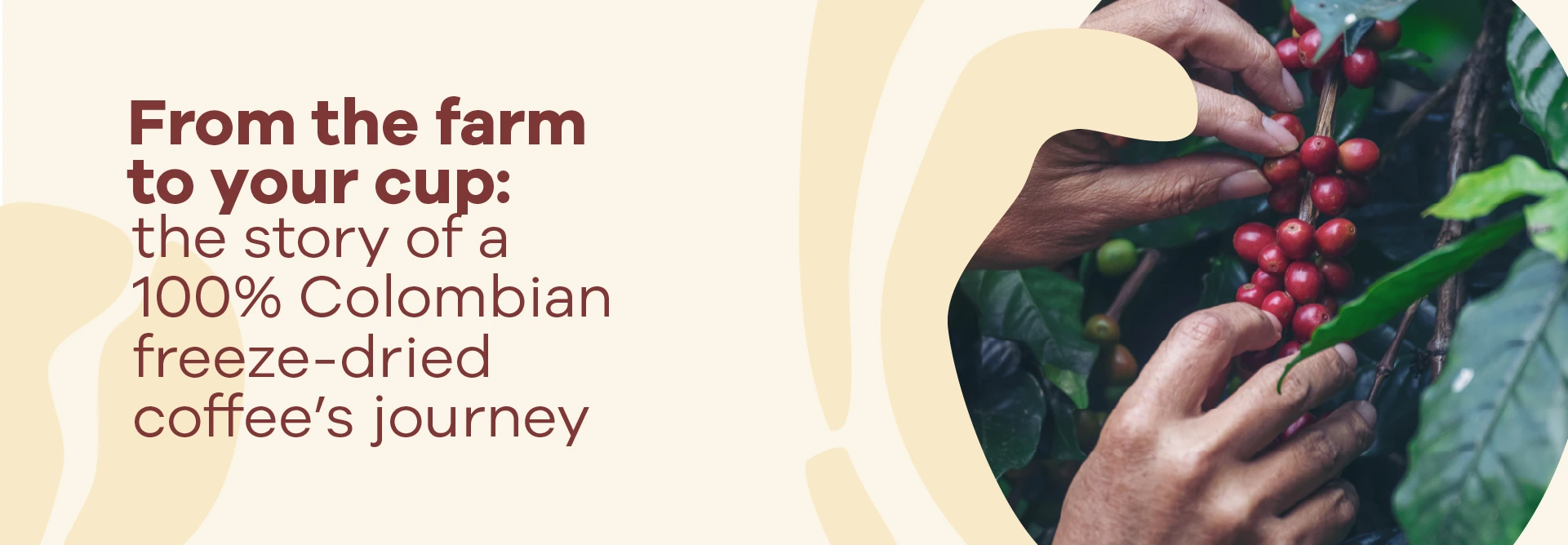
Many months will pass before the coffee cherries ripen and are ready. On that day, from early morning, the resounding noise of workers harvesting bean by bean fills the farms. Through a meticulous process, expert hands select each cherry at its exact point of ripeness. The raw material that will soon become 100% Colombian freeze-dried coffee is ready.
Large jute sacks are filled and sewn, then loaded onto machines or sturdy pack animals to descend the mountains toward cooperatives located across different regions of the country. Here, Almacafé appears as a bridge between the countryside and industry, collecting green coffee beans from each cooperative and bringing them together with the harvests of other hands, other farms, other stories that share a common purpose. There, the coffee is received, weighed, stored, and begins to become part of something greater.
Once at Buencafé, the product of land, sun, and human care enters the realm of science. Here, the beans go through eight processes, each essential to ensuring the quality of 100% Colombian coffee:
- During roasting, the beans awaken their “soul,” releasing their aroma, notes, nuances, and character. After this, they are ground and ready for transformation.
- In extraction, pure water passes through the ground coffee, drawing out its essence and becoming a dark, intense, and soluble liquid extract.
- The magic begins during cryoconcentration. At low temperatures, water starts to separate in the form of ice, leaving behind an increasingly concentrated and purer extract.
- Next, this dense liquid is aerated in a process that makes it light and porous—an essential step for its solubility.
- Then, the coffee undergoes extreme freezing (-50 °C).
- At this stage, the coffee is fragmented into small granules and precisely classified before moving on to the next step.
- Freeze-drying. Under vacuum conditions, the ice within the coffee transforms directly from solid to vapor in an almost invisible phenomenon known as sublimation, resulting in a coffee crystal that fully preserves its flavor, aroma, and origin with extraordinary complexity.
- Before reaching the world, expert tasters evaluate it. They taste it, analyze it, and validate it—because every batch must live up to what it represents: not only quality, but the identity of Colombia’s emblematic agricultural product—coffee.
Finally, the coffee is packaged and begins a new journey. From the Colombian Andes to distant ports, and from there to more than 60 countries. It crosses oceans, changes language, culture, tables, and labels, becoming a wide range of private label coffees bearing the 100% Colombian seal.
One day, somewhere in the world, someone opens a jar, adds hot water, and—perhaps without realizing it—brings meaning to a journey that began on a mountain, in a seed, in the hands of more than 556,000 coffee-growing families of Buencafé.



 English